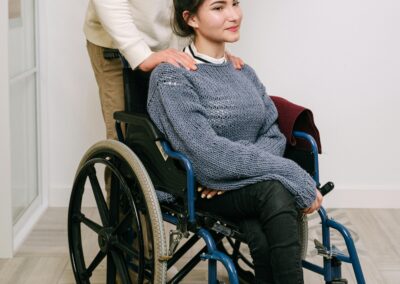
Learning About My Health & Diagnosis
Learning About Your Health Information
- Learn the name of your health condition(s), its causes, possible complications, and how it might show up in your daily life.
- Know how to describe your health condition to others.
- Know what symptoms to watch for and when and where to get help.
- Record any new symptoms in your Mywell Health – Health Profile and/or in your Calendar app on your phone.
Asking Questions About Your Health Condition
- Choose qualified and trusted health care professionals—such as your physician, nurse practitioner, and specialists—to learn more about your condition.
- Ask about your treatment options, medications, and therapies.
- Ask how your condition might change over time – but remember, everyone’s experience is different, and your journey is yours and yours only.
- Ask your physician or specialist for websites, handouts, or videos you should use to learn about your health condition.
- Don’t be afraid to speak up – ask your health care team to explain anything that you don’t fully understand.
Practicing with Sample Questions
Record your questions and the answers in your Notes app. Make sure the people you are asking are trusted and qualified.
What is my condition called?
How does it make my mind or body work differently from others?
What are the signs and symptoms of my condition?
What symptoms might mean that I am getting sick or need help?
What are the treatments and medications I need? How do they each work?
What are the screening tests I need to monitor my condition? How often?
Do I need a special diet? Are there limits on my activities?
What else should I know about my condition?
Checking the Accuracy of Your Health Information
- Ask your physician and other health care professionals for clarification of information you have collected. Get a second opinion if needed.
- Use trusted sources like Healthlink BC or well-known medical organizations’ sites.
- Check if the information is from reliable, peer-reviewed medical journals.
- Try to avoid sources that promote products or services without evidence or valid clinical studies.
- Ask about your physician’s copy of your electronic health record (EMR) -make sure the information in your EMR matches your personal health profile.
“Getting a new diagnosis or dealing with changes in your health can be overwhelming. It’s ok to hit pause, take a breath, and give yourself time to process everything that’s coming at you. When you’re feeling ready, try talking to someone about it. Whether it’s a parent, counsellor, or close friend, talking it out in a safe space with someone you trust can really help – I know it always does for me.”
Tip
Check out the Mywell Health Resource Kit for any terms you do not understand. Use the Youth Toolbox to link directly to tools and youth websites!
Youth Toolbox
Using Your Phone
Start with a Health Diary in your Notes App
List your
- Health condition(s)
- Medications & treatments
- Questions and answers
Having a Health Profile
Collecting Your Health Information
- Look up trustworthy info about your condition on research-based sites such as Healthlink BC.
- Use Health Gateway BC (a free tool from the Government of BC) to access your health test results online.
- Sign up for My Care Compass to see your lab results.
- Get printouts of your past and present medications from your pharmacist.
- Hang onto the pharmacy handouts you are given with prescriptions.
- Get a copy of your test or imaging results (such as Xray, Ultrasound, CT scan, or MRI), and write down what the results mean.
- Scan any documents you do collect into your digital Mywell Health files and/or print them for your Mywell Health binder.
Building Your Own Health Profile
Mywell Health has created a fillable PDF for you to complete your own Health Profile. Everyone should have their own that is up-to-date and accessible in print or digitally.
- Watch the video “How to complete a Health Profile.
- Download the Health Profile fillable PDF tool and save it to your personal files.
- Open the Health Profile doc and add your name and today’s date.
- Use the tables and answer what you can.
- Ask your family member(s), health advocate or health professionals for help.
- Make a complete list of all your medications – everything you take, including over the counter drugs (OTC), vitamins, herbs, and supplements.
- Write down your side effects or reactions to any medications.
- Be honest about your substance use – including alcohol, weed, vaping, or any other recreational drug use.
- Save your completed Health Profile to the cloud-based storage you use.
Understanding the Benefits of a Health Profile
A personal health profile is a detailed and up-to-date record of your health information. Learn how it can help you get safer and faster care, especially in case of emergencies.
Supports Your Self-Advocacy & Voice in Your Health
- Can help you understand your health information better.
- Gives you confidence to ask questions and speak up.
- Puts you more in control of your health decisions.
- Helps physicians understand your health quickly when you are traveling or in a new place.
Better Communication
- Physician offices, clinics, urgent care, and emergency rooms do not always share records.
- Your health profile can help health care professionals know your health history right away.
- When you are in pain, stressed, or confused, written information helps avoid delays.
- Can be very helpful for people with communication or language barriers, anxiety, or pain.
- Should include your emergency contacts, care wishes, advance directives, and organ donation information.
Medication Safety
- Keep a clear, updated list of all medicines you take, including prescriptions, over-the-counter (OTC) drugs, vitamins, and herbs.
- Can help prevent prescribing or mixing medicines that should not go together.
Faster Help in Emergencies
- Emergency staff can quickly see your allergies, medical conditions, and medications.
- Lists important health history items like past illnesses, surgeries, and drug reactions.
- Can help prevent repeat tests or treatments that are not right for you.
Better Team Care
- Helps family members or caregivers share the right information to care professionals.
- Allows physicians, nurses, specialists, and pharmacists to work from the same information.
- Helps track your health conditions, treatments, and changes over time.
Using Your Health Profile
- Update your health profile with any new information or changes.
- Save your completed changes in your health profile to your icloud storage.
- Ensure you have the icloud storage app on your phone.
- Practice using your health profile on your phone.
- Share your health profile with your physician, specialist, nurse practitioner and health care professionals supporting your care.
“No one can remember all their health information off the top of their head – that’s why it’s smart to use your phone to track things like symptoms, medications, and any changes in your health. Make sure all your health information is recorded in your own health profile. Learn how to complete a health profile and save it to your phone. That way, you can. Answer questions about your health at appointments or in case of an emergency.”
Tip
Make sure to save and share your health profile digitally so that you can access it 24/7 on your phone during appointments or in case of an emergency.
Youth Toolbox
Using Your Phone

- Save your updated Health Profile to your cloud-based storage.
- Save it to your phone so you have access 24/7.
- Notes app to record your medication list and describe symptoms.
- Alarm app to remind you to take your medications.
- Calendar app to list new symptoms.
- Health app to set medication reminders, track symptoms, and more.
Self-Advocacy, Decision-Making & Giving Consent
Learn About Self-Advocacy
- Check out what self-advocacy means, in the resource kit.
- Talk with your parents and family about your need to learn to speak up for yourself.
- Talk directly to your health care professionals and ask your won questions.
- Ask for explanations about anything you don’t understand.
- Get to know your patient rights and your responsibilities.
- Choose friends and mentors who help support your needs and wishes.
- Practice describing your health condition and asking questions about your health with a close friend to build your confidence.
- Learn about and share your choices around medications, surgery, treatment options, therapies, organ donation, blood transfusions, and more.
- Know when and how to ask for help.
Practicing Decision-Making Skills
- Know that this is your health, your journey – you have the right to ask questions and be part of making decisions about your health.
- Talk with your parents and family about your need to learn to be involved in your health care decisions.
- Talk with your physician and other health professionals about your choices on ways to reduce your symptoms.
- Talk about side effects and treatments that bother you or make you worry about the future.
Making Safe Choices
- Focus on taking your meds as they are prescribed even if they cause side affects you don’t like.
- Learn about how alcohol and substances can affect your health.
- Plan ahead if you are travelling, hiking, biking, or out on a boat – what do you need with you? Medications, snacks, water, emergency drugs (like an Epi pen).
- Identify friends and family members who know what you need if you become unwell?
- Explore more about making safe decisions in ‘My Feelings, Emotions & Mental Health activities’.
Learning about Consent, Access to Information & Privacy
- Learn about the laws around personal information, privacy and confidentiality in BC.
- Share with others how you want to be involved in your health care and decision making.
- Talk to your parents, guardians, and/or family members about what it means to give informed consent.
- Learn about the Infant Act and what the age of consent is in BC.
“I’ve learned that I need to take responsibility for my health. That means asking questions, speaking up, and making sure I’m looking after myself. I don’t need to know everything, and it’s okay to say “I don’t get this” or “I need more time to decide. By the time I’m 18, I’ll be expected to make decisions and give consent to treatments or surgery on my own. It is a good idea to start to learn about and discuss with your parents/ guardians about your choices and all the responsibilities around giving your own consent.”
Tip
Learn how to be your own self advocate, speak up for yourself and take an active role in your health and lifestyle decisions.
Youth Toolbox
Using Your Phone

- Notes app to list your questions.
- Contacts app to list for all your physicians, health care professionals, care partners, and emergency contacts.
- Photos app to keep photos of your personal/provincial health number (PHN), and other relevant medical ID, in a separate photo album on your phone.
My Emergency Health Plan
Planning Ahead for Getting Help or Emergency Care
Having an emergency health plan helps you know what to do if your health condition worsens or something unexpected happens. It also helps others understand your health condition(s), what actions to take, what medications may be needed, and how to help you quickly. Here is the information you need to prepare and discuss ahead of time.
- List your health condition(s) and emotional health and mental illness concerns.
- Keep your personal Health Profile up to date and accessible on your phone.
- Share your Health Profile with your emergency contacts ahead of time, in case of an emergency.
- Create a paper copy of your Mywell Health Planner in a binder. Keep it in your kitchen next to your fridge for First Responders.
- Write a list of warning signs that might indicate that your condition is getting worse. Share this list with others close to you.
- Know what to do if your symptoms suddenly change or become serious.
- Carry emergency medicines if needed (such as an inhaler, epinephrine, or insulin).
- Keep extra medication (with dosages information) and supplies in case of travel, delays, or emergencies.
- Know the names of your medical devices and what they do. Be able to describe how they work to others and First Responders.
- Keep backup supplies, batteries, or charging equipment available for medical devices or pumps if required.
Knowing Who to Call and When
- Learn how the health care system works in your community.
- Ask your physician or specialist what to do if your symptoms worsen or what would be considered an emergency for you.
- Understand which symptoms mean you should rest at home, call your physician. nurse practitioner or specialist, visit urgent care, or go to the hospital.
- Keep your Health Care & Professionals contact list up-to-date. Have in the list –which professional to contact for what – what type of health concerns.
- Know how to call 811 for general health advice.
- Know how to call 911 or access emergency services in life-threatening situations.
Naming Your Emergency Contacts
- Choose emergency contacts you trust, spend time with, and who live close to you.
- Write down their full name, phone number, and relationship to you.
- Talk with your family about who your emergency contacts are.
- Know that often your emergency contacts are usually your parents/guardians (until 19 years), or family members – who may also act as your health advocate(s).
- Choose a teacher or most important adult at school that knows about your health condition and what to do to help.
- Share your health condition, medications, and allergies and written emergency health plan with your emergency contacts.
- Consider sharing access to your personal Health Profile with them.
- Tell your emergency contacts if you are an organ donor or wear medical alert.
Recording Your Personal Emergency Health Plan
Remember, in case of significant changes in your condition or an emergency, you might not be able to communicate clearly. Preparing a personal emergency health plan can help First Responders, those around you, and health care professionals have the important information they need to help you quickly and safely.
Consider recording your plan in your Notes app under ‘My Emergency Health Plan’ and keeping an printed copy in your Mywell Health planner/binder next to your fridge. First Responders look first to your refrigerator for emergency information needed.
Suggested contents for your Emergency Health Plan
-
Health Conditions – list of your physical and emotional health condition(s). Include the name of each condition and how it affects you.
-
Medications – including all over-the-counter (OTC) drugs, herbs, supplements and vitamins. For all include name, dosage, and how often you take it.
-
Allergies – to medications, food or other substances – like latex, and your allergic response.
-
Internal or external medical devices (such as pumps, pacemakers, tubes, ostomies, monitors, or others). Include a description of how each device functions or a link to the relevant website for more information.
-
Emergency contacts list with name, phone and relationship to you.
-
Health care professionals list – especially your physician, nurse practitioner, specialists, surgeons, and pharmacy.
-
Personal/ provincial health number and any relevant insurance information.
-
Limitations – list any concerns for mobility, hearing, sight, communication, or other.
-
Decision documents – outlining Do Not Resuscitate (DNR) / No CPR Order, Advance Care Plan, or Advance Directive. Including where documents can be found.
-
Organ donation status – are you registered as an organ donor.
“Having an emergency health plan or “I’m getting sick” plan is a good idea. It is so you know your warning signs and what to do when you start feeling unwell. Know who to call for different situations. Share with friend, teachers, or coaches what your health condition is, the medications you take, and what to do if you are unwell. Stick to your plan, and share it with a friend so you’re not handling it alone.”
Tip
Consider sharing your emergency plan, health condition(s), medications, and allergies with your close friends, teachers, coaches, and those you spend time with – so they can help you when you need it.
Youth Toolbox
Using Your Phone


- Contacts app to list your physician(s), health care and other professionals, care partners, and emergency contacts (you can setup emergency contacts in your contacts app so they’re easy to find in case of an emergency).
- Photo of your personal/provincial health number (PHN) and medication list on your phone.
- Notes app to keep track of your medications, including time to take them and dosage.
- Cloud storage app (of your choice) to allow access to your Health Profile, Medication List and/or Health Care & Business Professionals list.
Tips for Health Care Visits
Getting Ready for Your Health Care Visit
- Use your phone’s Notes app to track your symptoms, concerns, questions, and the names of the health professional you’re seeing.
- Review your medications, recent test results, and any referrals.
- Bring your personal/provincial health number (PHN) that is on your BC Services Card or Driver’s License.
- Bring your updated health profile and medication list (include Over the Counter (OTC) drugs, herbs, supplements, and vitamins).
- Learn the roles of different professionals (such as a physician, nurse practitioner, or specialist) and what care and advice they can and cannot provide.
- Know that most visits are scheduled for 10 minutes to address 1-2 questions. (You may be able to book a longer appointment if you have complex health issues).
- Plan and write down the (2) questions you want answered in your Notes app or paper.
- Bring a family member or person you trust to be your health advocate to remind you of your questions and offer support, if needed.
Participating in Your Health Care Visit
- Sit close to your physician, make eye contact, and let them know you have questions.
- Ask if you can record the visit or specific information being given on your phone.
- Take notes or ask someone you trust to do so—include the date, new symptoms, questions, answers, test results, diagnosis, and next steps.
- Ask for clear explanations—don’t hesitate to request simple language.
- Ask for written explanations to your questions. Ask for a print copy of the information discussed or have them email you a copy.
- Express how you want to be treated, how you want to be spoken to, and how much time you need to make decisions – it gets easier with practice.
- Ensure all your questions are answered before you leave.
Getting a Referral to a Specialist
- Ask your physician or nurse practitioner why you are getting a referral to a specialist.
- Talk about their location, the hospital they admit to, and length of wait times.
- Know how to follow-up on a referral.
- Ask to be placed on the cancellation list to get the earliest appointment available.
Knowing What to Bring to a Health Care Visit
- Personal/ provincial health number on your Driver’s license or BC Services card.
- Updated health profile.
- Updated medication list (including OTC, herbs, supplements, and vitamins).
- List of questions and goals for the visit.
- Your health advocate to take notes, record instructions, and offer support.
“When you go to a health care visit, try to make the most of it by being prepared and knowing what you want to talk about. Write your questions in your phone ahead of time and speak up about what you need or don’t understand. Before you leave, make sure you have a plan that makes sense to you and that you know what happens next.”
Tip
Learn how to follow-up on a referral.
- Confirm that the referral was sent.
- Call the referred office to ensure they received it.
- Ask for available dates and request to be added to the cancellation list.
Youth Toolbox
Using Your Phone


- Notes app to list your questions and a place to record the answers.
- Cloud storage app to access your Health Profile.
- Voice memos app to record your visit and any teaching, with permission.
- Search and save/bookmark websites or information suggested.
- Photos app to take pictures of handouts or websites suggested by your physician.
Using Free App’s to Track My Health
Using Your Notes app
- Start by dedicating a page/folder to “My Health” and listing your health conditions.
- Use your Notes app to track your symptoms—what it feels like, when it starts, what you were doing when it started, and any patterns.
- Watch for big changes in your energy, weight, sleep, stress, or diet.
- Make a medication list of what meds you take, when you take them, and their dosages—use it to jot down reactions to new medications (this includes all over the Counter (OTC) drugs, herbs, supplements, and vitamins).
- Use it before and during health care appointments.
- Have a questions and answers section. Review it before and use it during health care visits.
- Know that you can attach documents, photos, screen shots and audio clips into your Notes app files.
- Bonus! The date and time are automatically stamped on your notes.
Using Your Contacts app
- Create a new list for health care and other professionals.
- Record their name, phone, email, services they provide you and how best to contact them.
- If a health care professional, consider including the date of your last visit and for why you were seen.
- List your emergency contacts and all people you consider your care partners.
- Consider adding your friends, teachers, trusted adults, coaches, and others who support your lifestyle and health.
- Learn more about who should be in your contacts list for your health and lifestyle planning in ‘My People’.
Keeping a Health Calendar
- Use what works for you—phone apps like Google or iCloud Calendar, or a paper calendar that you can keep in a visible spot.
- Track appointments with date, time, and location – note if it’s in-person, phone, or video.
- Medication schedule (especially if there are any changes).
- Track any new symptoms or health changes—don’t forget to follow up and record if you are feeling better after treatments.
- List vaccinations, bloodwork, tests, checkups, and screening tests.
- Be sure to log in your wellness plans – like your physical activity schedule.
- Log your health goals and wins (like better sleep, eating well, less stress, more activity).
- Share your calendar with a care partner or health advocate if helpful.
- Use it alongside your Health Profile to see what’s working and what’s not.
- Think about colour coding your health calendar for different ‘categories’ to make it easier to spot what you’re looking for.
Using Reminders, Alarms, Audio & Photo apps
Check out different ways you can use the apps on your phone or iPad to help track your health.
Photo app
Take pictures of
- Personal/ Provincial Health Number (PIN)
- Medication list
- Physical symptoms like rashes, bruises, etc. over time.
- Paper requisitions for labs or other tests.
Reminder/Alarm app
- Set repeating reminders for routines like taking your meds every day and at what time, to drink water or take a break for a meal, if sitting/studying when move your body, or anything else that you think would be good for you!
- Reminders to book follow up appointments, get bloodwork, and to refill medications.
Voice Memos
- Ask for permission to record your health appointments and any health teaching.
- Record any changes in your symptoms or health. Include changes that are improving your health
Cloud Access to Your Health Profile
- Download the Mywell Health – Health Profile and follow the steps to complete it.
- Update your health profile with any new information or changes as they occur.
- Save your completed changes in your Health Profile to your cloud storage (like iCloud or Dropbox).
- Ensure you have the storage app for your prefered cloud storage on your phone (if you have an iPhone, you probably already have the “Files” app downloaded).
- Practice accessing your health profile on your phone.
- Share your health profile with your trusted family members, physician, specialist, nurse practitioner and health care professionals in case of an emergency or in supporting your care.
Health App
- Set medication reminders with dosage included—you’ll get a reminder when it’s time to take them, and you can track when you do so, which makes it really easy if you ever need to look back.
- Track symptoms.
- Track menstrual cycle and associated symptoms (if applicable).
- Track nutrition and dietary intake.
- And more…
“Taking responsibility for your health can start right on your phone using free apps you already have. You can use apps, notes, and alarms to track your medications, symptoms, and appointments so nothing gets missed. Be aware though that your phone data is not always secure. Think about backing it up on your home computer. Once you find what works for you, share these ideas with a friend so you can support each other.”
Tip
Use your phone and all its free apps to help manage your health and wellness. Learn how to use your calendar, notes, audio, alerts, and photos apps to record and share your health information. Remember, a backup is a good idea – on paper or your home computer.
Youth Toolkit
Using Your Phone for Health Planning



- To manage your health
- Prepare for health care visits.
- Talk to others about your health and share important emergency information.
- Always have your health information easily accessible.
- And more…